In short
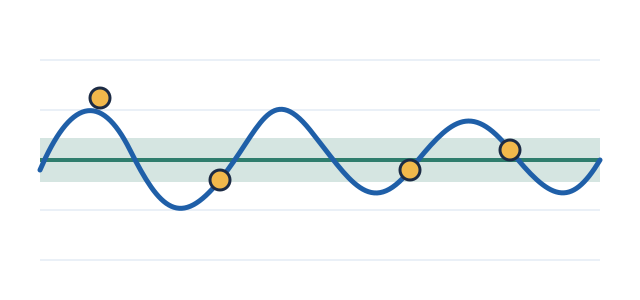
- A home glucose reading is a snapshot of one moment. An A1C result is an average over roughly the past three months.
- Public health agencies publish standard ranges for diagnosing diabetes and common goals for people who have it, but your own targets are set with your care team.
- An A1C can be wrong for some people, for reasons that have nothing to do with how well they are managing.
Two kinds of number
People who take metformin usually meet two kinds of glucose number, and it is easy to mix them up.
The first is a blood glucose reading: the amount of glucose in your blood at the moment the sample is taken. It is measured in milligrams per deciliter, written mg/dL. MedlinePlus explains that glucose comes from food, that the body breaks most food down into glucose, and that rising glucose signals the pancreas to release insulin. CDC describes a home reading as a snapshot: blood glucose changes all through the day with food, medicines and activity, so one reading cannot give the whole picture.
The second is the A1C, also called hemoglobin A1C, HbA1c or glycated hemoglobin. NIDDK describes it as a blood test that reflects your average blood glucose over the past three months. It is reported as a percentage, and the higher the percentage, the higher your glucose has been on average. NIDDK calls it the main test used for managing diabetes.
How the A1C test works
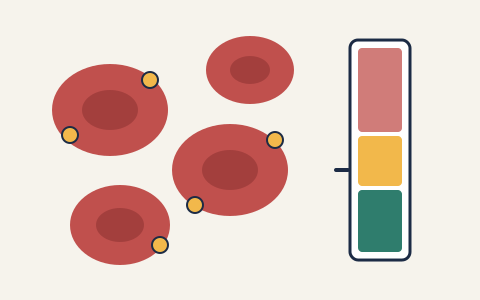
Hemoglobin is the protein in red blood cells that carries oxygen. NIDDK and CDC explain that glucose in the blood attaches to hemoglobin, and that the more glucose there is, the more hemoglobin ends up with glucose attached. The A1C test measures the share of hemoglobin that has glucose attached.
Why three months? CDC explains that red blood cells are replaced roughly every three months, so the glucose attached to them reflects that period. NIDDK adds a useful detail: the most recent 30 days count for more in the result than the earlier months.
Because it is an average, the A1C cannot show short spikes or dips. NIDDK says sudden, temporary highs and lows do not show up in it, although large changes over the past month will. That is one reason CDC says the A1C does not replace home monitoring for people who have been asked to check at home.
You do not need to fast before an A1C test, according to NIDDK and CDC, although a clinician may run other tests at the same visit that do need fasting.
The ranges used for diagnosis
NIDDK publishes the ranges used to diagnose prediabetes and diabetes in people who are not pregnant. They come from four different blood tests:
| Result | A1C | Fasting plasma glucose | Oral glucose tolerance test (2 hours) | Random plasma glucose |
|---|---|---|---|---|
| Normal | Below 5.7% | 99 mg/dL or below | 139 mg/dL or below | Not used |
| Prediabetes | 5.7% to 6.4% | 100 to 125 mg/dL | 140 to 199 mg/dL | Not used |
| Diabetes | 6.5% or above | 126 mg/dL or above | 200 mg/dL or above | 200 mg/dL or above |
Two points from NIDDK keep this table in proportion. First, any test used to diagnose diabetes needs to be confirmed with a second measurement unless there are clear symptoms. Second, different tests can disagree: a glucose test can show diabetes when an A1C does not, and the reverse. Clinicians repeat tests before diagnosing for exactly this reason.
NIDDK also says not to try to diagnose yourself: a home blood glucose meter cannot diagnose diabetes. CDC says that if you had your blood glucose tested at a health fair or similar event, you should follow up with your doctor so the result can be checked.
Targets once you have diabetes
Once someone has diabetes, the A1C is used to track how things are going. Several sources give a common goal and then immediately say it is not the same for everyone.
- A1C. CDC says the goal for most people with diabetes is 7 percent or less; NIDDK says below 7 percent for many people. NIDDK also explains that a level safe for one person may not be safe for another. Keeping below 7 percent may not be safe if it causes frequent low blood glucose, and a less strict goal, such as between 7 and 8 percent or higher, may suit people with severe lows, people who cannot sense lows, or people with advanced complications.
- Daily readings. CDC lists typical targets of 80 to 130 mg/dL before a meal and below 180 mg/dL one to two hours after starting a meal, for most people with diabetes who are not pregnant.
- Low and high. CDC and NIDDK describe a reading below 70 mg/dL as low for most people with diabetes, and CDC calls a reading below 54 mg/dL severely low. NIDDK describes a reading above 180 mg/dL as too high for most people.
- Time in range. For people who use a continuous glucose monitor, NIDDK describes "time in range": the share of the day spent within a target range, which for many people is 70 to 180 mg/dL.
Every one of these sources adds that targets differ by age, other health problems and other factors, and that you should ask your care team which targets are right for you. Treat the numbers above as the starting point for that conversation, not as your personal goals.
How often is an A1C checked? NIDDK, CDC and MedlinePlus all say at least twice a year for people with diabetes, and more often if goals are not being met. CDC says people with prediabetes are usually re-tested every one to two years.
A1C and average glucose
Some labs report an estimated average glucose (eAG) beside the A1C. NIDDK explains that it converts the A1C percentage into the same units a home meter uses, to make the two easier to compare. CDC publishes these pairs:
| A1C | Estimated average glucose |
|---|---|
| 6% | 126 mg/dL |
| 7% | 154 mg/dL |
| 8% | 183 mg/dL |
| 9% | 212 mg/dL |
NIDDK warns that the eAG will not match your daily readings, because it is a long-term average rather than a single moment.
When an A1C can mislead
The A1C depends on red blood cells and hemoglobin, so anything that changes them can push the result up or down. NIDDK, CDC and MedlinePlus name:
- Hemoglobin variants, which NIDDK says are more common in people of African, Mediterranean or Southeast Asian descent and often cause no symptoms. A clinician may suspect one when A1C and glucose results do not match.
- Sickle cell anemia, thalassemia, iron-deficiency anemia and other blood conditions.
- Recent blood loss, transfusion, hemodialysis, kidney failure and liver disease.
- Pregnancy.
- Certain medicines; CDC and MedlinePlus mention opioids and some HIV medicines.
MedlinePlus says to tell your provider about everything you take, and not to stop any medicine unless your provider tells you to. NIDDK adds that ordinary variation is expected: the same blood sample tested again might give a result a few tenths of a percent higher or lower.
Worked example
This example is invented and describes no real person. A lab report shows an A1C of 7.4 percent and an eAG beside it. Reading the CDC table, that sits between the 7 and 8 percent rows. What it means for this person, and whether anything should change, is a question for the care team, who know their history and their target. The report is a starting point for that conversation, not an instruction.
Checking at home
Not everyone with type 2 diabetes is asked to check at home, and the sources say your doctor will tell you whether, when and how often. MedlinePlus explains the two common methods: a blood glucose meter, which tests a drop of blood usually from a fingertip, and a continuous glucose monitor (CGM), which uses a small sensor under the skin to measure glucose every few minutes. Both sources say CGM readings need checking against a meter: NIDDK says this is sometimes needed, for example when a reading seems doubtful, and CDC says people who use a CGM still need to test with a meter every day. Your care team can explain what applies to you.
NIDDK suggests keeping a record of each check, with the date, time and result, plus notes such as what you ate or how active you were, and taking it to appointments. CDC adds practical points: wash and dry your hands before testing, keep test strips sealed and away from moisture and extreme temperatures, and never share lancets or other monitoring equipment, even with family.